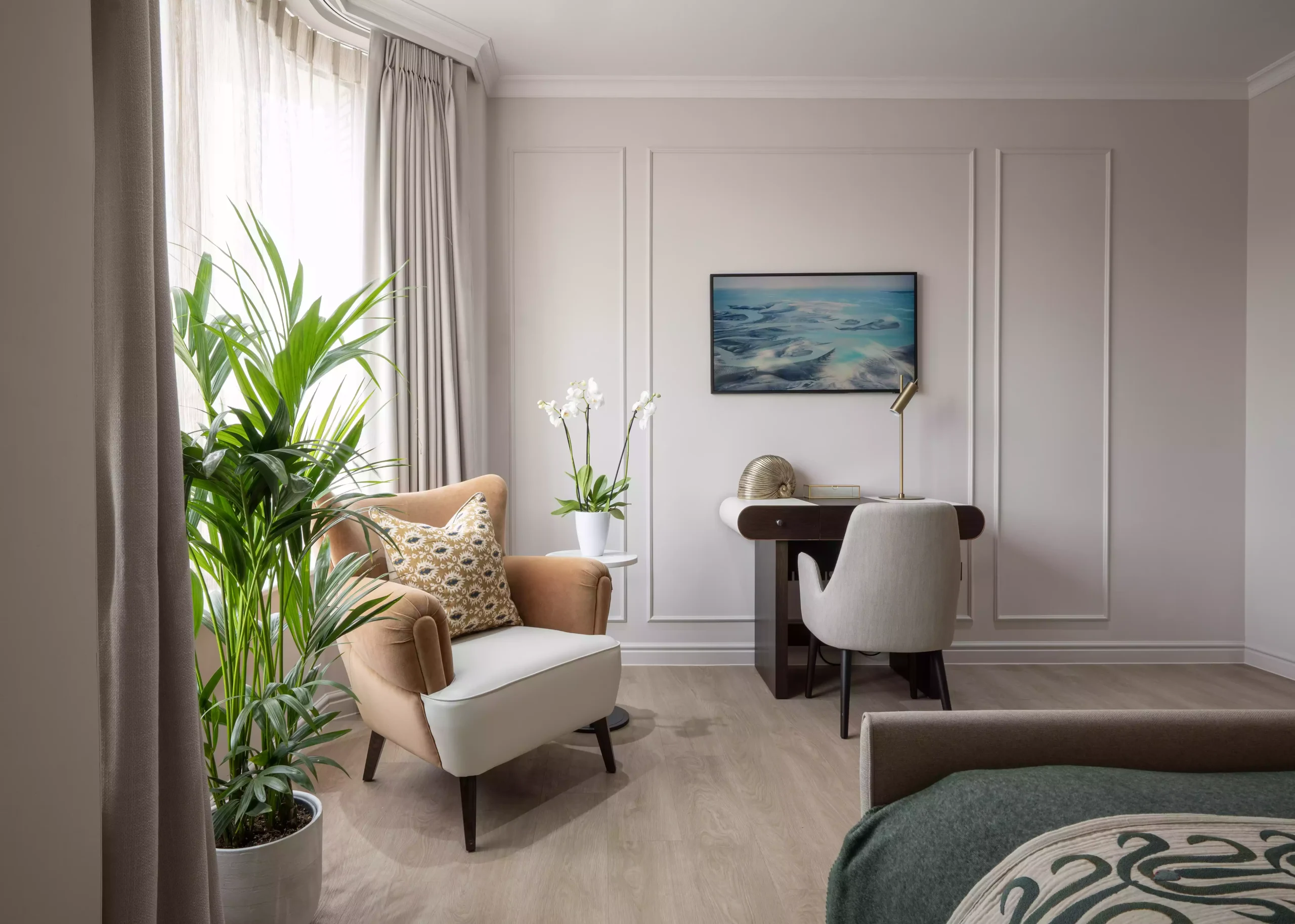
For older adults, winter is not simply a change in temperature. It brings a shift in rhythm, light and sensory input that can influence how each day feels. When this shift is thoughtfully addressed, winter becomes an opportunity to support comfort, continuity and emotional balance through interior environments that reflect the natural world beyond the window.
This approach is central to reimagining later living – not as something separate from nature, but as something that remains closely connected to it, even during the colder months.
Why nature matters more in winter
Nature plays an important role in emotional regulation, focus and overall wellbeing throughout life. For older adults, its influence often becomes more noticeable in winter, when shorter days and colder weather can subtly affect mood, energy levels and concentration.
Nature is not experienced only through gardens or outdoor walks. It is felt through changing light, familiar textures, colour, and the steady rhythm of the seasons. When these cues fade, the sense of balance they provide can fade too.
Interiors that reflect natural patterns help restore that balance. This is where the benefits of nature for elderly wellbeing are most clearly felt – not through activity alone, but through atmosphere.
Light as a seasonal reference point
In winter, light becomes one of the most influential elements of daily experience. Natural daylight supports circadian rhythm, alertness and emotional steadiness. As daylight hours shorten, interior lighting plays a greater role in shaping how the day unfolds.
Spaces designed to make the most of available light, through orientation, reflective surfaces and restrained colour choices, feel open and responsive, even on darker days. Gentle shifts from brighter mornings to warmer evenings mirror the natural progression of the day and help maintain a sense of time and flow.
This alignment with natural rhythm supports winter wellbeing for older adults, allowing connection to the day without effort or stimulation.
Texture, material and sensory grounding
Nature is experienced through touch as much as sight. In winter, sensory grounding becomes particularly valuable, offering reassurance and familiarity when the outside environment feels less present.
Natural materials such as wood, stone and woven textiles introduce subtle variation that engages the senses without demanding attention. Their weight, warmth and texture create interiors that feel lived-in rather than static.
Moving through these spaces offers continuity and ease. This steady sensory feedback supports emotional balance throughout the season and reinforces the benefits of nature for elderly individuals in everyday life.
Colour and seasonal alignment
Winter landscapes are defined by restraint – softer contrasts, muted tones and quieter detail. Interior spaces that reflect this seasonal palette help create visual calm that suits the slower pace of winter.
Rather than high contrast or heavy saturation, nuanced colours add depth and warmth. These tones echo the natural world at rest and help maintain harmony between indoor and outdoor environments.
This visual consistency reduces sensory fatigue and supports a composed, restorative atmosphere during colder months.
Rhythm, routine and seasonal continuity
Nature follows patterns. Days shorten gradually, light changes predictably and activity adjusts with the season. In winter, when routines can become less distinct, interiors that reflect rhythm help maintain balance.
Consistent daily cues such as predictable lighting changes, clearly defined spaces and regular moments for rest, help structure the day. These signals support orientation, both within the environment and within time itself, particularly when external cues are less obvious.
Winter wellbeing for older adults is shaped less by constant stimulation and more by considered sequencing and repetition. Gentle routines, repeated daily, support clarity and emotional steadiness.
Enclosed warmth and winter comfort
Winter naturally draws life inward. Well-considered interiors offer a sense of enclosure that protects from the elements without feeling confined.
Design that balances openness with intimacy reflects nature’s own winter pattern, conserving energy, maintaining equilibrium and allowing for quiet renewal. These environments support rest, reflection and engagement at a comfortable pace.
This inward focus strengthens connection rather than reducing it, allowing attention and energy to be used with intention.
Nature as presence, not activity
The benefits of nature for elderly wellbeing do not depend on constant engagement. Often, they are most effective when nature is simply present.
A space shaped by natural light, materials and proportion communicates calm without explanation. It offers familiarity without effort. In winter, when energy may fluctuate, this quiet presence becomes especially important.
Winter as a season of restoration
Winter has long been understood as a time for consolidation rather than expansion. For older adults, it can offer space for balance and renewal when supported by environments that respect natural cycles.
By bringing elements of nature indoors, through light, texture, rhythm and restraint, winter becomes less about limitation and more about depth. It is reimagined as a season that supports thoughtful living rather than something to endure.
This perspective reflects a broader shift in reimagining later living: recognising that connection to nature does not disappear with the seasons. It simply takes a different form.
A considered winter experience at Loveday
At Loveday residences, winter is approached with intention, where our expert team deliver a carefully considered rhythm to each day, from structured routines and engaging experiences to elegant, chef-prepared meals and entertainment.
It is an environment designed to support balance, clarity and renewal throughout the winter months.