

Getting older is something many of us think about quietly — perhaps when climbing the stairs feels different, or when a friend’s health scare brings our own wellbeing into focus. The question then becomes: what does it really mean to age well?
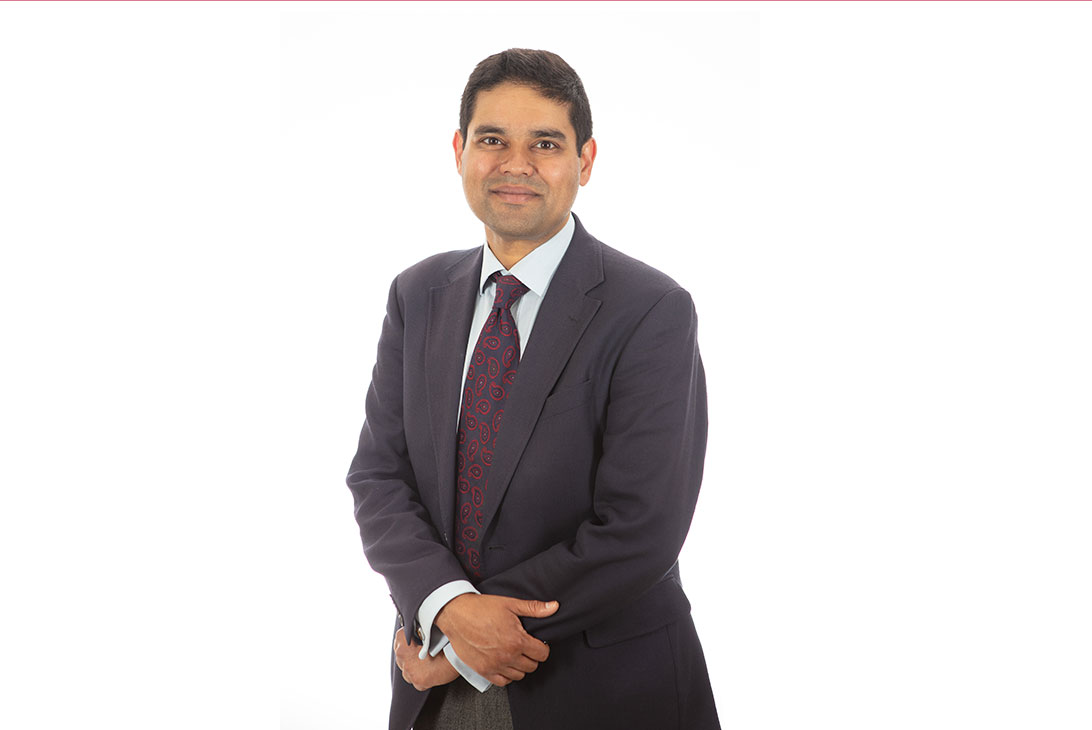
To explore this abstract theme, but with the benefit of science, we’re speaking with Dr Ganan Sritharan, the trail-blazing general medic and geriatrician celebrated by the medical world (and Tatler, more on that later) for his holistic approach to ageing, preventative care, and supporting independence in later life. Ganan works with adults at all stages and most enjoys complex cases. Many Loveday patients are his.
His revelations about the medical journey to old age are astonishing for their prescience and “Break In Case Of Emergency” realism. It’s a pleasure to meet him.
I set out to either be a cardiologist and a surgeon, or join obstetrics and gynaecology having loved delivering my first baby, but then I worked with a General Medic who was at the end of his career and I realised something. This man had the definitive opinion for the intensive care team for any unknown diagnosis. His ward was the epitome of his personality in human form. Staff were all interviewed by him — this was before privatisation — patients were all dressed and ready to receive their story and I remember thinking I don’t necessarily know whether I want geriatrics. I mean it’s not the sexiest of specialities and certainly not the “ology” of “ologies”. But, but I wanted to be him.
Despite surgical training — I’m quite good with my hands — and with cardiology research lined up, I switched to geriatrics. But, more than a geriatrician I’m a General Medic who does all-age care. In the NHS, this is quite different.
I’m the physician for the vascular surgical team here at Imperial. My youngest death on the NHS was a 36-year-old due to diabetes, heart disease and kidney failure. That was telling. It’s less about having that diagnosis and more about your age at the time — or the generation you came from.
So, my 85-year-olds, for a complex operation, I find it quite easy to prognosticate the case and manage it perioperatively because very often they went through austerity. Rationing persisted long after the War. They didn’t have processed foods or food fashion and those foundations, up until their mid-to-late 20s, set the tone for the rest of their lives.
In contrast, with my 45-50 year olds I’m finding heart disease already. The instance of cancer is rising in the over 20-year-olds while falling in the over 80-year-olds. We’re finding microplastics in coronary artery plaque, so a bit of this is environmental and a bit affluence in recent decades and that has equated to less physical activity, less mobility. We have healthier foods (you can buy organic for your children) but it’s not as though red meats are consumed once a week or a fortnight as a treat. It’s now everyday and even the lean meats are not derived from the same natural, organic culture. And so we now have a much more complex middle group.
Add to this Covid. I was head of acute and specialist medicine at St Mary’s during the pandemic: nice promotion in 2019, but a harrowing couple of years. On the upside, the legacy is there’s one of me in every surgical team at Imperial so general surgery, neurosurgery, trauma, each has a physician like me looking after all-age care and for the complexity.
When I present on this, to colleagues around the world — the challenges of a more complex younger cohort ageing at a much more advanced rate — I show the audience the picture of Dorian Grey because there’s an assumption that if you’re older then you must be frail, and that’s simply not the case.
A better measure scientifically, is muscle mass for its correlation with frailty. Research from Imperial about ten years ago showed that the bulk of non-exercisable muscles, the ‘psoas’ in our abdomen (ones you can’t exercise in the gym) correlates directly with the clinical frailty before us, meaning how independent you are physically, how much care you’ll need at a younger age, and the risk of fractures later. It all cascades into what we truly understand as frailty: effectively having a disproportionate outcome relative to a minor insult. So, for example influenza A, if it hospitalises you and whether you’re put on a ventilator will be determined not by being 20 years younger, but being 20 years fitter.
While lead physician for the Mayo Clinic I rewrote all their health screening and preventive medicine protocols there, and in London, but stepped away last year although I still work with the international team.
A bit of me now is all about how we normalise blood pressure in the 40-year-olds to not require cardiological intervention and avoid a stroke or heart attack, and an “ologist” putting a stent in their heart in ten years. If I can extend that to 12 or 15 years I’ve done my job. I can’t turn back the clock, but I can certainly slow progression.
I often get international patients of all ages come in and say: “I’ve had 15 different opinions. What’s wrong with me?” The nice thing about my job is I can collate their history and curate it and then I have the backup of my relationships with the Mayo, the best hospital in the world, to take my referral as if it’s a colleague in the next office. You need those connections in private medicine, and a personal reputation.
I’d avoided the private sector for years. The thing people kind of forget is that private medicine in London is the least regulated healthcare space in the western world. It is a word-of-mouth sector. Perhaps it was that aspect that landed me in the society journal Tatler as the go-to specialist for the capital. I had to then explain online with an update to my largely hidden background that I’m a general physician who likes complexity and frankly likes older people, but that actually transposes to younger age patients as well.
Tatler: “The go-to for complex or unexplained medical cases, Dr Ganan Sritharan … is often called in to untangle difficult diagnoses and oversee the care of older or medically intricate patients, ensuring treatment plans work seamlessly across specialities.”
But, I’m still low key because what I’ve learned from experience is that you can do volume or you can do quality, but you can’t do both. And if you’re not careful, quality becomes volume which is why you have to control it.
So, now as clinical director for medicine at King Edward VII I run the perioperative medicine service and unofficially the pre-operative assessments and the enhanced care unit which is our version of intensive care for what is effectively enhanced recovery. It means we admit a fractured hip at 2am and have a great outcome. A surgical colleague and I recently took a patient at the Lindo Wing who had been turned down elsewhere for being too medically complex, and she’s doing incredibly well.
I also work with Loveday. At first, when they opened in Abbey Road, I kept saying “no” as the big hitters in perioperative recovery or complex medical admission recovery have traditionally been outside of the M25. However, for a lot of my patients Central London is important, post code is important and frankly calibre of care is key, but less a concern than geography sometimes. Loveday also showed themselves to be very good at bespoking care: they recognise the patient’s individual needs. These are not all older people. I’ve had young traumatic injury patients, and sometimes very healthy independent ones who are just one intensive care admission away from being very frail, and they’ve gone on to live out their days, by choice, with Loveday because they stayed for two months and end up staying for two years.
I’ve got three or four who went for recovery and loved it. Loveday recognise clinical acuity while also making it a home and that is a staff piece. The cocktail nights, the nice menu, that’s great but that’s not what keeps them there. What keeps them there is the narrative with the staff.
I’m very clear with my patients about what we would do if the unexpected happens and their priorities are to not die in A&E and I can deliver that. The NHS is a pressure driven system, and the private sector hasn’t quite risen to the risk-benefit of opening its front doors 24/7 to everything. So there is that tiny gap in the market, and for my group of patients, a lot of whom have my personal number, Loveday’s an option. Loveday will also tell their patients at A&E to ask for Ganan and often all we can do is just say yes and we will manage everything.
Private medicine is not going to give you treatments that are inappropriate, but we can offer a nicer room, privacy and dignity. That includes Christmas which becomes important at the end-of-life. Gathering the family and advising that there’s no waiting for improvement can be a gift.
There is an ability for Loveday to also fulfil the acute with a really quick turnaround. That’s The 1150 Club. It’s slightly my idea from back in the day and I said you should be bringing in people who want to be fit, who need guidance from professional physios, who are planning to have a shoulder operation because they play tennis and now at 48 they need it doing. It’s a different cohort to those who fall in their 60’s or 70’s, the unexpected traumatic injury. So, the planned patient does just as well as long as we go hand-in-hand to deliver their care. That’s how I became one of Loveday’s biggest referrers as a single entity.
I say to patients, I’ll have the Loveday team call you. If it works for your budget go there for two weeks after you leave the hospital and get your confidence back. Getting the pain relief, having a shiny new joint is wonderful, but the reality is that for every day you are less mobile, you’re looking at roughly a week of physical recovery.
It’s also before the surgery. I see a patient and ask how long they’ve been on a four wheeled walker. “Oh, well, three months,” they say. I extrapolate and it’s almost a year and half to undo all of the deconditioning they’ve gone through while readying themselves for their high risk operation.
The only time I care about your date of birth is for that recovery case: your ability to recoup sustainable rehabilitative muscle. Otherwise, I have the same view for everyone.
Do the minimum 30 minutes cardiovascular work per day, just like eating your five-a-day in nutrition. For those who physically don’t leave their sofa or work from home, for the love of God, get out of the house and do 30 minutes. It moves you away from the highest risk profile group of having a body from fat sitting at 50 per cent, which is a direct surrogate marker of your cardiovascular risk.
Gradient walking, tension bands, low weights but high frequency resistent training, Jane Fonda’s workouts from the ‘80s, Pilates, Tai Chi are all really good at increasing core strength and muscle components. You reduce adiposity, a big cardiovascular risk, in a concerted fashion without throwing out your joints.
I recommend 20 minutes of tension bands and own body weight exercise every day and 30 minutes five days a week on a treadmill, increasing the gradient every four weeks by one each time. That’s the paradigm shift in health, and in a controlled environment. You won’t get this walking to the shops and stopping on the way for X and Y.
You’ll win a sustainable reduction in risk of sarcopenia and therefore frailty. You may not look as good as you would like to in terms of being at the gym, but frankly that doesn’t equate to all the other things we’re worried about.
Of course, one is dementia. Every five years, the Lancet has a review about what we can say is modifiable. There are fallacies in the media, in tandem with drugs for dementia when most of the time they mean Alzheimers dementia, ie pre-senile, likely genetic pre-disposition, age-inappropriate cognitive impairment — a very specific diagnostic profile. There is also amyloid plague that everyone talks about with these drugs, but we knew about it 40 years ago from post-mortems. Scans are more sensitive at looking at amyloid deposition, but it does not correlate with how cognitively impaired people are. Therefore, even the Lancet acknowledges that we don’t have a definitive dementia treatment. If at 89 the brain fails, the brain fails.
Alcohol is a factor: the time spent on the juice. Am I going to stop someone older from having a couple of whiskies at night, absolutely not? But, if for the 50 years before, they’ve consumed more than a couple every night, that will have taken it’s toll on their cognition. Anything that is a poison takes its toll. The environmental component too — where we grew up, the socio-economic background — we can’t un-ring the bell of early developmental years.
I want to mention international travel which some patients treat like taking a taxi. We know that flipping your circadian rhythm will accelerate small vessel disease in the brain and there’s another cognition risk. Good routine, good sleep is vital.
Rarely dementia strikes in your 50s and it’s natural to want every test under the sun if you think it’s coming. The Mayo in the US offers true genomic screening — about 300 different types of pre-disposition factors, but we could find 27 mutations that correlate with certain conditions, but don’t cause them. So, they’ll offer 2.5 hour genetic counselling sessions before anyone signs up for that test, and more than half then opt out.
The reality is that decline with age is perhaps 60 per cent preventable, and the modifiable factors are cardio-vascular disease with high blood pressure, smoking, diabetes and kidney disease.
My Dad died of a myocardial infarction at 60. I was 21. My point to patients is you’ve worked really hard all your life, and you should live to enjoy retirement, not just live to retirement. I lost 20 kilos when I had my third child because I looked at her and thought I’m not going to make it to her graduation if I’m not careful. Personal drivers are important.
I have generations of patients now paying grandchildren’s school fees, and their concept of planning is that having a will is enough. My point is there’s a chasm between being ill and being in need and dying and no one plans for that. Care can be so onerous that it is breaks families unless it’s done right, and it’s so plannable.
My advice? Engage once in a baseline health screening process and then have a relationship with a trusted private GP or a general physician like me who will curate your health going forward. Don’t shop for health screening. Have someone who knows you and knows who to call when they need an “ologist”. Unfortunately, there’s a negative financial impetus to looking after you when you are really unwell, so you want a bond, someone who has your quality of life and your best interests at heart and can act in that “Break In Case Of Emergency” situation. Medicine all truncates off that connection, that trust.
Loveday is part of it and serves as one of the few places with the clinical piece rooted in, with links to the doctors and the surgeons they need. I know my patient will be happy with Loveday, and that experience reflects on us. Our reputation is all we really have.
About Dr Ganan Sritharan
Dr Ganan Sritharan, MBBS MA (Oxon) MRCP is a highly respected Consultant Geriatrician and Physician based at Imperial College Healthcare NHS Trust, working across St Mary’s Hospital and Charing Cross Hospital. Registered since 2009, he graduated from the University of Oxford and completed his clinical training at University College London. His career specialism is elderly medicine, with a focus on pre-operative assessment and optimization, vascular surgery liaison, and rehabilitation, earning recognition for quality improvement and perioperative innovation. His contributions extend into education, sharing expertise with surgical trainees and healthcare professionals through workshops and clinical coaching programs.
WORDS: Caroline Bye
(Unpublished manuscript)