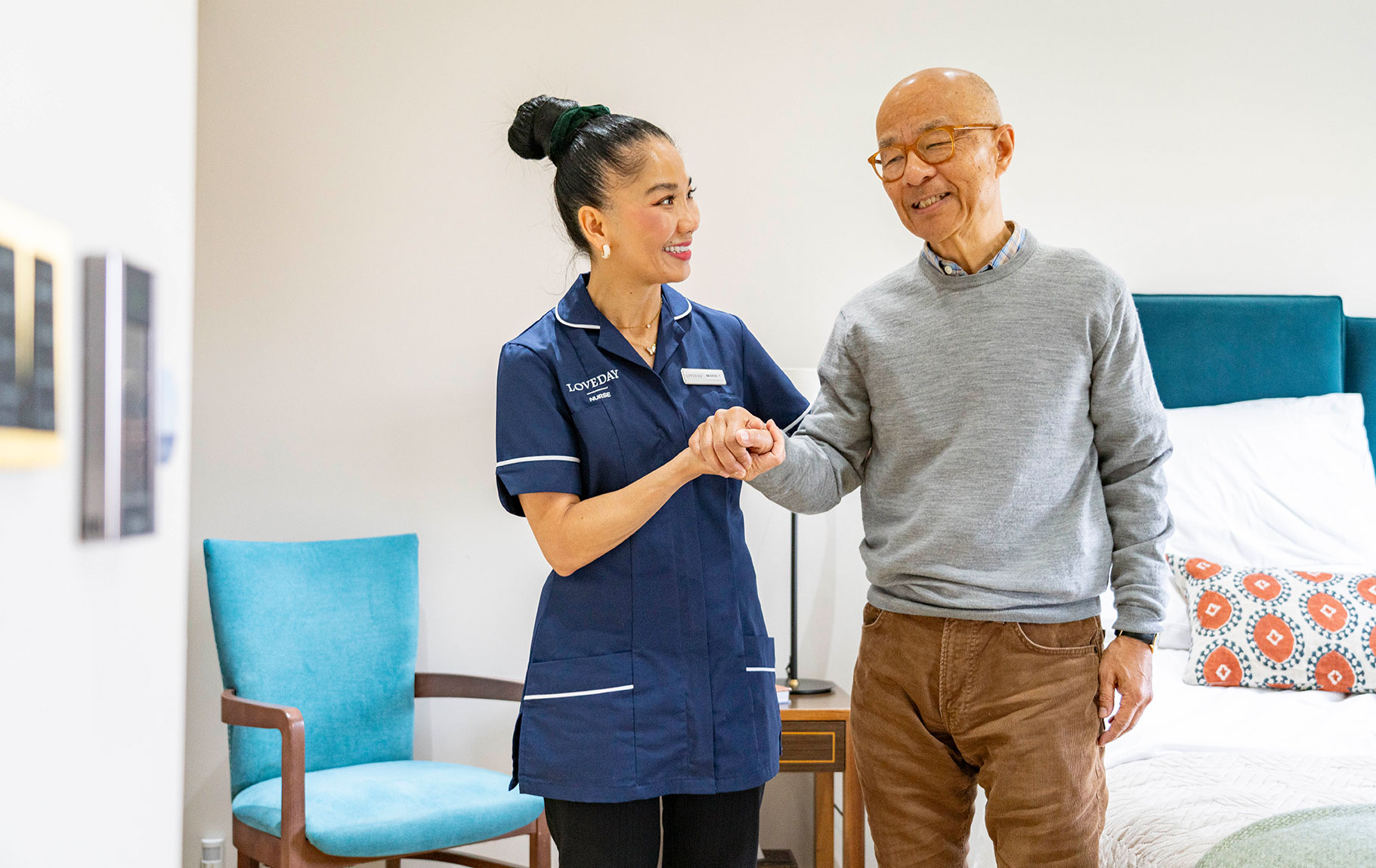
Choosing nursing care is an important decision, particularly when care needs are complex or changing. For families considering their options, understanding what sits behind the quality of care can be just as important as considering the environment, amenities and wider experience.
Research from Lottie’s 2024 Care Seeker Survey found that 64% of care seekers considered good management and staff an important factor when choosing a care home, making it the most important consideration in the survey. Ratings and reviews were also significant, with 56% considering care home ratings and 49% actively looking at reviews.
But what does high-quality nursing care actually involve? It brings together clinical expertise, professional judgement, appropriate staffing, effective communication and systems designed to maintain quality and safety.
For individuals with complex or evolving needs, these elements become particularly important. Good nursing care requires professionals to understand the individual, recognise changes, make informed clinical decisions and work effectively with others involved in their care.
There are also important structures behind the experience of care itself. Professional standards establish expectations for nursing practice, while staffing requirements and clinical governance provide frameworks for supporting quality and safety.
So, what sits behind high-quality nursing care, and what should individuals and their families look for when considering this type of support?
The Importance of Clinical Expertise
Nursing combines clinical knowledge with professional judgement. Registered nurses are responsible for assessing needs, delivering care within their competence and recognising when further clinical input may be required.
Clinical Judgement & Expertise
Clinical knowledge only becomes useful when it can be applied to the circumstances of the individual. Nursing judgement involves understanding what is happening, recognising what may have changed and deciding what that change means for the person receiving care.
The ability to make appropriate professional judgements is particularly important when an individual’s health is complex or evolving. A nurse may need to recognise that something has changed, understand its potential significance and determine what action is appropriate.
As explored in our article on full-spectrum clinical support and lifestyle enrichment, different aspects of an individual’s care can interact with one another. Clinical expertise provides an important foundation for understanding those connections and ensuring that care remains appropriate.
Recognising Changes in Health
Close observation is an essential part of nursing practice. By developing a detailed understanding of each individual’s usual health, behaviour and wellbeing, nurses are better placed to recognise subtle changes in their physical or mental condition.
The Nursing and Midwifery Council’s Code sets out professional standards for nurses, including expectations around assessing needs, responding to changes in health and seeking appropriate support or making referrals when necessary.
This is one reason continuity and familiarity can be valuable in nursing care. Understanding an individual’s usual presentation can provide important context when something changes.
Coordinating Clinical Support
Nursing care does not always take place in isolation. An individual may have input from doctors, therapists, pharmacists or other healthcare professionals, depending on their circumstances.
Good communication between those involved helps ensure that relevant information is understood and that different aspects of care are considered together. Clear and accurate records also provide an important point of reference when care is being delivered by more than one professional.
Effective communication and collaboration are important elements of professional nursing practice, helping different areas of expertise contribute to a coherent approach to care.
Staffing: More Than a Headcount
The number of nurses and other professionals available is clearly important, but staffing is about more than numbers alone. The skills, qualifications and experience within a team also need to reflect the needs of the people receiving care.
The requires providers to deploy sufficient numbers of suitably qualified, competent, skilled and experienced staff to meet people’s needs. It also recognises the importance of appropriate training, professional development, supervision and appraisal.
This means that appropriate staffing needs to take account of both the number of people available and the range of expertise within the team.
The Right Level of Clinical Expertise
Different individuals require different forms of nursing expertise. Someone with complex neurological needs may have different requirements from someone managing multiple long-term conditions or recovering from significant surgery.
The important consideration is whether the clinical knowledge and experience available are appropriate to the needs of the individual.
Skills, Experience & Professional Development
Clinical practice continues to evolve, making professional development an important part of maintaining high standards.
Ongoing learning can help nurses maintain and develop the knowledge and skills required for their roles, while supervision and professional support provide opportunities to reflect on practice and ensure that standards remain high.
For individuals and families, this means that the quality of nursing care is shaped not simply by who is present, but by the expertise, competence and professional standards that underpin the care being provided.
What is Clinical Governance?
Clinical governance can sound like a technical term, but its purpose is relatively straightforward. It provides the framework through which the quality and safety of care can be assessed, monitored and continually improved.
The requires providers to have effective systems and processes for assessing, monitoring and improving the quality and safety of their services. It also encompasses areas including record keeping, risk management, feedback and the ongoing review of governance arrangements.
Much of clinical governance is invisible to the person receiving care, and that is arguably part of its value. Its purpose is to create the structures that support consistent clinical standards without making those structures the focus of everyday life.
For a nursing service, this can include clinical policies and procedures, professional oversight, quality monitoring, accurate records and processes for reviewing how care is delivered.
The purpose is not simply to have systems in place. Effective governance provides a means of understanding whether those systems continue to support high standards as people’s needs and clinical practice evolve.
Professional Standards in Nursing
Alongside organisational systems, high-quality nursing care depends on the professional standards expected of individual nurses.
The NMC Code is structured around four themes: prioritise people, practise effectively, preserve safety, and promote professionalism and trust. These principles encompass both clinical practice and the way nurses interact with the people in their care.
This includes treating people as individuals, maintaining the knowledge and skills needed for safe and effective practice, communicating clearly and working within the limits of professional competence.
These standards help define what good nursing practice should look like, while professional judgement allows nurses to apply them appropriately to the circumstances of each individual.
Understanding the Individual Behind the Clinical Needs
Clinical expertise is most effective when it is applied with an understanding of the person rather than treating a diagnosis as a complete picture of the individual.
An individual’s medical history, current conditions, medications, mobility, communication needs and nutritional requirements can all form part of their clinical picture. Understanding how these considerations relate to the person’s established routines and preferences can also provide valuable context for the way care is delivered.
This does not mean that every aspect of someone’s life needs to become a clinical consideration. Rather, good nursing care recognises that clinical needs exist within the context of someone’s everyday life.
A change in mobility, for example, may have implications beyond physical movement. It can affect how someone gets around, participates in familiar routines or spends time with others. Understanding those wider implications can help nursing support remain appropriate to the individual.
When Clinical Excellence Becomes Part of Everyday Life
The highest standards of nursing care are not necessarily those that make clinical support the most visible part of someone’s day.
Clinical expertise should provide the support needed for individuals to live with complex or changing needs, while allowing everyday life to continue around it.
That might mean adapting support as clinical requirements change, ensuring nutritional needs are understood alongside individual preferences, or coordinating different aspects of care so that the person does not have to navigate them separately.
In this sense, clinical excellence and quality of life are not competing priorities. Strong nursing care can provide the clinical foundation that allows an individual to continue living within an environment that reflects their needs, preferences and circumstances.
What Should Families Look For in High-Quality Nursing Care?
For someone considering nursing care for themselves or a family member, understanding the standards behind the service can be as important as considering the visible environment and day-to-day experience.
Useful questions to consider include:
- What level of clinical expertise is available?
- How does the staffing provision reflect the needs of those receiving care?
- What professional standards underpin nursing practice?
- How is clinical quality and safety overseen?
- How does care respond when clinical needs change?
- How well does the nursing approach understand the individual rather than simply their condition?
Looking at these areas can provide a fuller picture of the nursing provision behind the experience of care.
Clinical Expertise Within a Wider Experience of Care
At Loveday, clinical expertise forms an important part of a wider approach to care, with nursing support designed around complex and evolving needs while maintaining the individuality of each resident.
The aim is to provide the specialist support required while creating an environment where individuals can continue to enjoy the people, interests and experiences that are important to them.
When these elements work together, clinical expertise becomes more than a response to health needs. It becomes part of the foundation that allows individuals to continue living their lives with the appropriate support around them.
Please contact our Relationship Team to learn more about Loveday and our approach to nursing care.