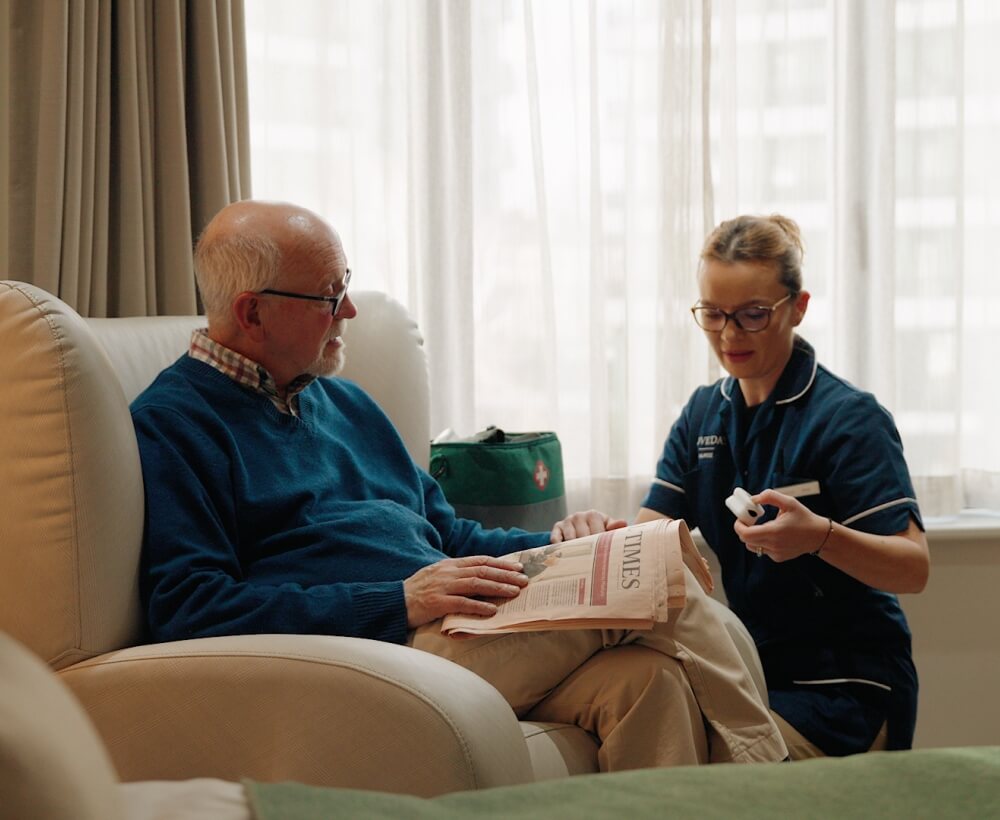
No two people will experience Parkinson’s in the same way and in later life, those living with the condition may require additional support. Symptoms can vary significantly from person to person, with the NHS highlighting that the way they develop is different for each individual. Parkinson’s may affect movement, balance, eating, sleep, mood and other aspects of everyday life, with its impact extending beyond the physical symptoms of the condition.
When providing care, it’s important to understand the condition and how symptoms can present, as well as knowing the individual and what they need to live an enriching life. This means looking beyond the diagnosis to understand the impact of Parkinson’s on an individual, what they can do independently and where additional support may be helpful. As needs change, care must be regularly reviewed and adapted to reflect the individual’s abilities, preferences and priorities.
How Does Parkinson’s Affect Those Living with the Condition?
Parkinson’s is a progressive neurological condition that primarily affects movement, and some of the most common symptoms are:
- Tremors
- Muscle stiffness
- Slower movement
Other non-motor symptoms can include:
- Low blood pressure
- Eye changes
- Difficulty eating and swallowing
- Depression and anxiety
- Thinking and memory changes
- Speech and communication changes
In total, there are over 40 symptoms of Parkinson’s that can interact with each other and create a different experience for all individuals living with the condition. Symptoms may also come and go, or fluctuate over a period of time. This may be particularly noticeable when certain medications are used, with symptoms resurfacing to some degree as the effects subside. These changes can make day-to-day life more unpredictable for those living with Parkinson’s, so it’s vital for carers to observe and understand this, and be prepared to offer tailored support.
How Does Parkinson’s Impact Individuals in Later Life?
Most people with Parkinson’s begin to develop symptoms when they are over the age of 50. As the condition progresses, it can begin to affect more aspects of daily life, such as moving around the home, getting dressed, preparing food and eating. If speech and language are affected, some individuals may also find it more challenging to communicate. There is research to suggest that faster progression is linked to the age at which the condition develops. One study found greater motor impairment after a similar duration in a group of people who experienced older-onset Parkinson’s vs a group whose condition began between the ages of 43 and 66. This highlights the importance of monitoring how Parkinson’s affects each individual over time, particularly where symptoms may progress differently in later life.
In later life, Parkinson’s could exist alongside other health conditions or mobility considerations. It’s important to know the full picture and understand how conditions interact with each other. Comorbidity, or living with two or more chronic health conditions, can make symptoms more unpredictable for individuals. Care needs may also change over time, and medications should be carefully considered and regularly reviewed by a qualified professional.
At the same time, it’s just as important to consider an individual’s abilities and the routines they may wish to follow so carers can offer a thoughtful approach to tailored support. For example, changes in communication may make socialising more challenging, but the individual may be able to navigate their home environment confidently with the use of some mobility aids.
What Does Parkinson’s Care Involve?
People living with Parkinson’s may need support with:
Medication Management
Medication can play an important role in managing Parkinson’s symptoms, so it’s important it is administered correctly on a consistent schedule. Nursing support may be required to administer medication according to the prescribed schedule and monitor how the individual responds. Any changes to medication should be assessed and prescribed by the appropriate healthcare professional.
Movement & Mobility
Movement and mobility support may include practical assistance with walking and moving around the house, possibly using specialist devices and equipment. An occupational therapist may advise on safe, suitable adaptations. People living with Parkinson’s may also be given specific exercises for aerobic fitness, strength, balance and flexibility by physiotherapists and healthcare providers to help them carry out everyday activities.
Eating & Nutrition
People living with Parkinson’s do not usually require a specific nutritional plan, but Parkinson’s UK advise eating a balanced diet to promote health, gain energy and relieve some symptoms. If swallowing becomes difficult, medical support may be required to ensure nutritional needs are met. A doctor or speech and language therapist can conduct an evaluation and offer tailored therapy. Where swallowing difficulties are present, a speech and language therapist or other appropriate healthcare professional can provide specific guidance on safer eating and drinking. This may include advice on posture, portion size, pace and the environment in which meals are taken.
Communication
If speech and communication changes take place, individuals may benefit from speech and language therapy. Those offering support on a day-to-day basis can also take simple steps to help with communication, such as turning down background noise, taking the time to understand fully and ensuring speakers can clearly see each other. Family members and those offering care should be patient, and should not try to talk over or speak for a person living with Parkinson’s to gain full understanding.
Emotional and Psychological Support
A Parkinson’s diagnosis can be a shock, and may take a toll on mental health. In addition, Parkinson’s can make an individual more prone to depression, anxiety and memory problems. Parkinson’s UK recommends taking steps to improve sleep, eating a balanced diet, being as active as possible and dedicating time to relaxing. It may also be helpful to speak to others with similar conditions via a group or forum, or to seek talking therapies.
What Should a Parkinson’s Care Plan Include?
The National Institute for Health and Care Excellence recommends that people living with Parkinson’s should have a comprehensive care plan agreed between them, family members, carers and specialist/secondary healthcare providers. Parkinson’s care often requires input from different professionals including specialist nurses, physiotherapists, doctors, occupational therapists, speech and language therapists and dietitians, so bringing this information together in one place can help ensure the right people have visibility, the individual’s wishes are clearly communicated and care can be coordinated effectively. Information detailed in the plan should include, but is not limited to:
- Medication management
- Personal care preferences and routines
- Dietary and mealtime support
- Communication and cognition support
- Exercise programmes
- Mobility assistance
- Skin care, particularly if an individual cannot be as mobile
- Mental health and psychological support
- Details of respite care or family care resources
Crucially, a care plan is not a fixed document and must be regularly reviewed and updated. Carers must acknowledge the varying symptoms, the progressive nature of the condition and the wealth of management and support options available. These insights should be translated into a practical care plan that works now, but that can be amended at any time to reflect changes.
Living Well with Parkinson’s
With the right combination of clinical care, practical support and personal adaptations, individuals living with Parkinson’s can continue to pursue their interests and make choices about how they spend their time. The NHS advises that it may be helpful to focus on:
- Exercising and eating a healthy diet to stay physically and mentally healthy, as far as this is possible
- Getting all available vaccinations, including an annual flu vaccination
- Being open about needs and feelings, telling people directly how they can help and choosing to spend some time alone if preferred
- Considering what equipment, care and adaptations would improve independence and quality of life, which may be available via support services
- Seeking support from groups, counsellors or psychologists, or contacting Parkinson’s UK for advice
- Understanding the financial support that’s available.
Living well with Parkinson’s requires thought, planning and tailored support, but it’s possible to maintain choice through targeted adjustments in everyday life.
Parkinson’s Care at Loveday
Parkinson’s care at Loveday is built around the individual, with highly trained clinical teams who take the time to understand each resident and build bespoke care plans to meet their needs holistically. Loveday offers care for individuals through all stages of Parkinson’s, with 24-hour nursing care on site and luxury residential care. Private suites can be adapted to accommodate all physical needs, as well as personalised based on individual tastes.
To learn more about Parkinson’s care or to arrange a private tour, contact our Relationship team.